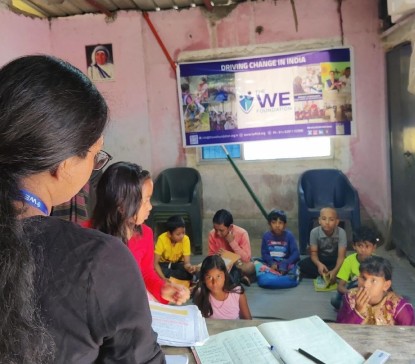
In a quiet lane of Kolkata, Project Vidyashree is transforming a small learning centre into a place where children with dyslexia and other learning difficulties are not only supported—but where the women around them discover their own strength and voice. Designed by The WE Foundation, Vidyashree combines after‑school academic support with nutrition and health monitoring, while actively empowering mothers and female educators who had long blamed themselves for their children’s struggles.
For years, Soma, a domestic worker and single mother, was told that her 9‑year‑old daughter was “lazy” and “slow.” Parent meetings left her feeling ashamed and helpless. When she enrolled her in Vidyashree, special educators explained dyslexia in simple Bengali, showing her how her daughter’s brain processed words differently rather than “less.” Week after week, she watched her read with multi‑sensory methods—tracing letters in sand, using colour blocks, and narrating stories with pictures. As her daughter’s confidence grew, Soma’s did too. She now sits in the front row during parent workshops, asks questions without hesitation, and gently corrects relatives who still label her daughter “weak,” saying, “O bhalo meye, alada bhabe shikhchhe” (She is a good child, just learning differently).
At the centre, Anindita, a young teacher from the same neighbourhood, had once doubted whether she was “qualified enough” to work with special‑needs children. Through Vidyashree’s training, she learned adaptive teaching strategies and how to track children’s growth and nutrition with simple tools. The first time a child who had never spoken in class read out a full line with her support, she realised that her patience and creativity were powerful professional assets. Today, Anindita leads group sessions, mentors new volunteers, and speaks at community meetings about early identification of learning difficulties—emerging as a local resource person other schools now call upon.
Vidyashree’s impact reaches far beyond the classroom. Regular health and nutrition check‑ups, growth monitoring, and counselling sessions become opportunities to involve mothers, grandmothers, and sisters as partners in each child’s progress. Women learn how to create supportive study spaces at home, advocate for accommodations at school, and celebrate small milestones instead of comparing marks. WhatsApp groups and centre meetings have evolved into informal support circles where caregivers share strategies and encourage one another, replacing guilt with solidarity.
At its heart, Vidyashree is about changing how a community sees both disability and womanhood. One mother like Soma who refuses to accept blame, one teacher like Anindita who discovers her expertise, one room full of children whose learning styles are finally understood—together, they show that when women are trusted with knowledge and leadership, they can build an inclusive world where every child, no matter how they learn, is given the chance to thrive.