
Skip links

A Home That Teaches: How MCPI Residential School Transforms Young Lives

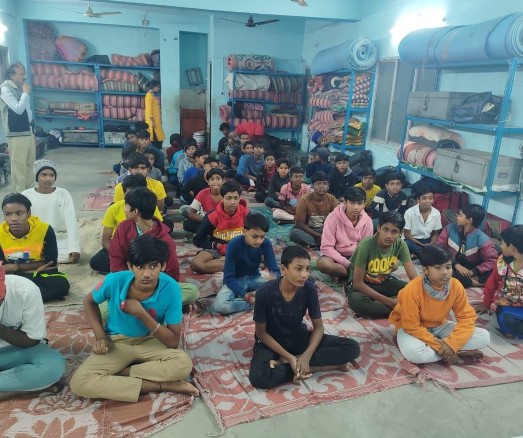
In the heart of North Kolkata, The WE Foundation’s residential schools offer far more than shelter—they create learning‑rich homes where some of the city’s most vulnerable children can finally study without fear of hunger, violence, or constant disruption. At the Maharaja Cossimbazar Polytechnic Institute (MCPI) residential unit, up to nearly a 100 boys live, learn, and grow together in a safe environment that places education at the centre of daily life.

For 11‑year‑old Chirantan, who once worked in a roadside stall near Sealdah, school was something other children went to. After being referred by the Child Welfare Committee and admitted to the TWF home, he received his own set of books, a timetable, and a quiet study corner for the first time. Evening study circles led by resident teachers helped him catch up on basic reading and maths; within a year, Chirantan moved from barely recognising letters to confidently reading storybooks aloud to younger boys. His proudest moment came when he stood on stage during the Christmas event at MCPI and narrated a short speech in Bengali and English—proof to himself that he belonged in a classroom, not on the street.

In the same dormitory, Rishit, a shy teenager from a nearby slum, used to hide his notebooks, convinced he was “weak” in studies. At the residential school, he encountered structured routines—morning assemblies, remedial classes, and digital learning sessions that made science and geography come alive on screen. With extra support from a volunteer mentor, he slowly moved from the back row to answering questions in class, and eventually began helping other boys with homework during study hour. When exam results showed his marks had jumped by nearly 20 percentage points, Rishit declared that he now wanted to become a teacher so “no child feels as lost as I once did.”

Education in TWF residential schools extends beyond textbooks. Children participate in art, music, value‑education sessions, and festival celebrations like the Christmas program at MCPI, where drawing competitions, games, and oath‑taking ceremonies reinforce creativity, teamwork, and shared responsibility. Regular health check‑ups, nutritious meals, and supervised routines ensure that learning is not derailed by illness or instability, while counsellors and caregivers work with each child on behaviour, confidence, and goal‑setting. Teachers and wardens—many of them women from the local community—receive ongoing support to manage classrooms, run evening tuitions, and create an atmosphere where questions are welcomed and effort is celebrated.

Ultimately, the TWF residential schools in Kolkata are about rewriting futures for children who might otherwise have dropped out or never enrolled at all. One boy like Chirantan reading his first full page, another boy like Rihsit daring to imagine himself as a teacher, one cohort of 100 children each year experiencing what a stable, nurturing learning environment feels like—together, they show how a residential school, when designed with care and high expectations, can become a powerful bridge from neglect to possibility.