
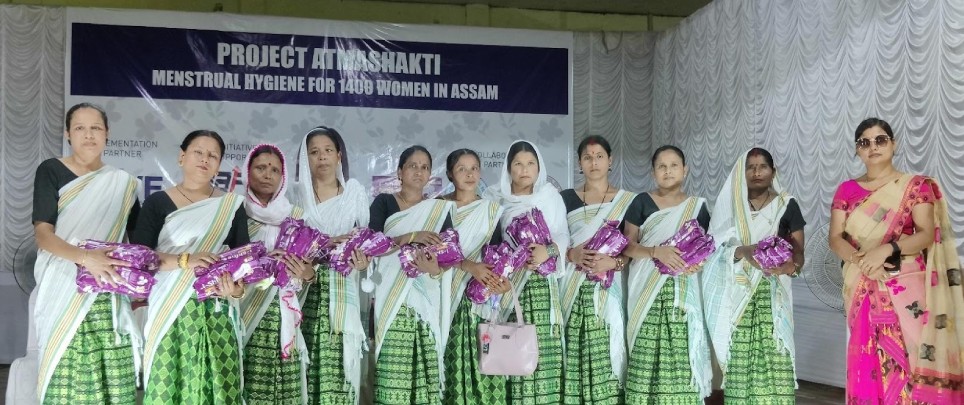
Across Margherita in Tinsukia, Assam, Atmashakti has become more than a menstrual hygiene initiative; it is a journey of over 2,500 SHG women discovering their voice, leadership, and economic potential over two consecutive years of the project. By placing self‑help group members at the centre—as trainers, mobilisers, and distributors of menstrual health and hygiene—The WE Foundation has turned “beneficiaries” into decision‑makers who influence how their families and communities think about women, money, and dignity.
In the narrow lanes of Tinsukia, 29‑year‑old Jonali once attended meetings only to sit in the back and sign when told. Through Atmashakti, she was asked to co‑facilitate a session in Assamese on myths around menstruation and women’s confidence. Nervous but determined, she practised her lines late into the night. The applause she received after that first session changed something within her; today, Jonali keeps records for her SHG, negotiates with local shopkeepers on prices, and is invited by the ward member to speak at community events. She says, “Agar ami chup thako, kunu amadar kotha sunibo na”—if we stay quiet, no one will hear us.
Further inside Margherita town, Mariam, a tea‑garden worker, used to feel she had no right to question anything—wages, working conditions, or even decisions at home. When Atmashakti trained her group to lead door‑to‑door outreach, she went from house to house explaining not only safe practices but also why women deserve comfort and respect. As neighbours began turning to her for guidance, Mariam gained the courage to attend a block‑level meeting for the first time. She now represents her SHG in discussions with local officials, proving to herself and others that a woman who once feared speaking to a supervisor can also speak truth to power.
By anchoring the project in SHG networks and running large, interactive sessions in the local language, Atmashakti has helped women practise public speaking, handle Q&A, manage logistics, and coordinate with government departments and media. These skills spill far beyond the project—into how mothers advocate for their daughters’ education, how groups negotiate for schemes, and how communities slowly replace shame and silence with dialogue and solidarity.
Atmashakti’s real impact lies in the quiet revolutions it seeds: Jonali balancing accounts instead of shrinking into the background, Mariam sitting at the same table as officials, hundreds of women walking into community halls with their heads a little higher. Together, these 2,500+ women are proving that when they are trusted with knowledge, responsibility, and opportunity, they do not just change how menstruation is understood—they change how womanhood itself is seen in Assam.