Skip links

Care for Hands – Turning Lessons into Lifelong Habits in Dharavi

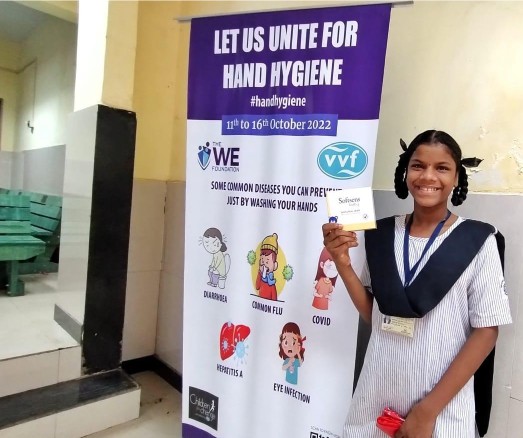
In the narrow lanes and crowded classrooms of Dharavi, Project Care for Hands transforms a simple act—washing hands—into a powerful lesson in science, self‑care, and responsibility. Through interactive sessions in BMC schools and community spaces, children learn not just that handwashing matters, but why it protects them and their families from disease, using easy‑to‑remember five‑step demonstrations and real‑life examples.

At a municipal school near Kalanagar, 11‑year‑old Sahil used to rush out of the toilet and straight back to class. During a Care for Hands session, facilitators used glow‑germ powder and UV light to show how “invisible germs” remain on unwashed hands; when Sahil saw his own glowing fingerprints on a shared desk, the lesson clicked. He began timing himself at the handwashing station, leading his friends in counting to 20 and correcting anyone who tried to skip soap. Today, his teacher calls him the “handwashing monitor,” and Sahil proudly explains the five steps of proper handwashing to younger students during school assemblies.

In another BMC school, Vaishnavi, a shy 13‑year‑old, discovered her voice through the campaign’s drawing and slogan competitions. Her poster—showing two hands forming a shield around a family—was selected for display in the corridor, with her message in Marathi and Hindi about “safai se suraksha” (protection through cleanliness). Encouraged by teachers, she went on to co‑anchor a Global Handwashing Day event, reading out facts she had helped research and interviewing a visiting WHO representative about why children’s habits can change entire communities. For Vaishnavi, Care for Hands became a bridge from quiet classroom presence to active student leadership.

Care for Hands treats every session as a mini classroom without walls. Children learn the science of germs, the links between hygiene and school attendance, and how small daily actions can prevent outbreaks—using songs, quizzes, experiments, and peer demonstrations rather than lectures. Teachers and non‑teaching staff are trained alongside students, so that the messages continue long after the campaign week ends. Soaps are distributed with clear instructions to “teach at least one person at home,” turning each child into a messenger who explains the five steps to parents, siblings, and neighbours at community taps.

By reaching tens of thousands of students and families across Dharavi and BMC schools, Care for Hands shows how education can travel from classroom benches to kitchen sinks and public standpipes. One boy like Sahil insisting his friends use soap, one girl like Vaishnavi turning hygiene into art and advocacy, one school after another adopting daily handwashing routines—together, they are building a culture where clean hands are not a one‑day campaign but a learned, proud habit that protects learning, health, and dignity for years to come.