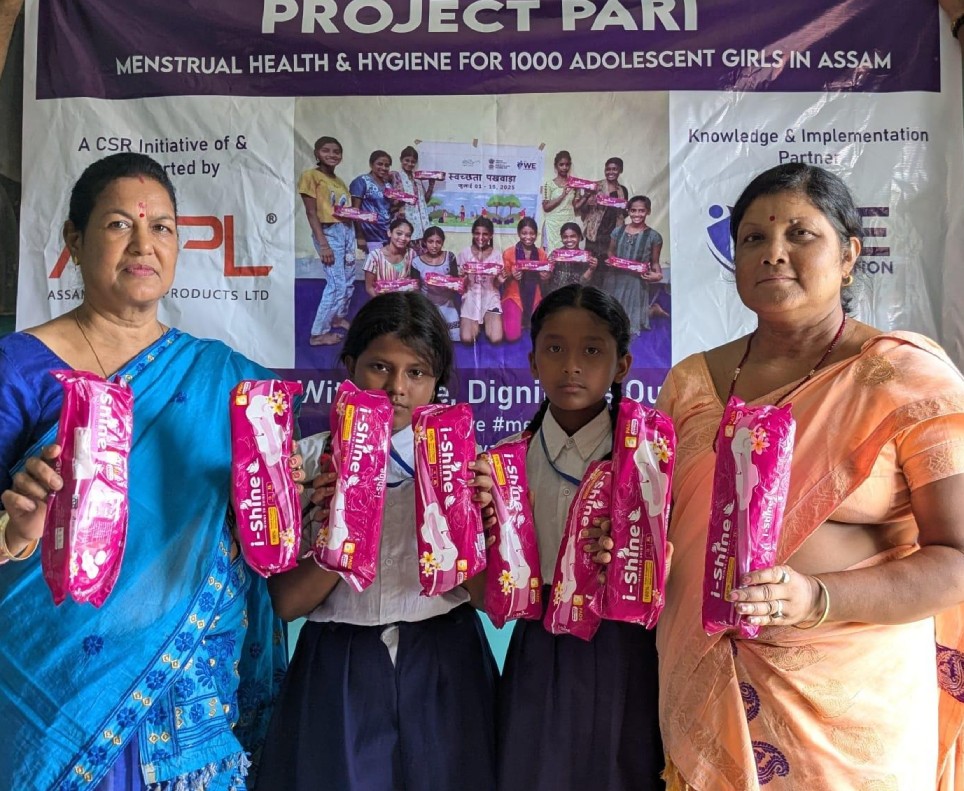
Access to menstrual products is paired with something even more transformative: the message that girls’ dreams, comfort, and dignity are non‑negotiable. As girls learn to manage their periods with confidence, they also start taking more space in student councils, assemblies, and extracurricular activities, discovering that their voices can shape school culture and community attitudes.
Stories of Courage from Guwahati
One of our beneficiaries, a 14‑year‑old Mitali used to skip three days of classes every month, afraid of being mocked for stains and cramps. After attending Pari sessions and receiving support from a female teacher trained as a “Pari Champion,” she began carrying a hygiene kit and, more importantly, stopped apologizing for her body. When a classmate was laughed at for a stain, Mitali stood up and firmly told the boys, “This is not something to joke about—it’s normal and it’s ours.” That moment turned her from a quiet back‑bencher into an informal mentor whom younger girls now seek out for advice.
Another beneficiary, Amrita had always wanted to become a teacher but felt she had to remain “invisible” to avoid criticism from relatives who believed girls should be “modest” and unquestioning. Pari’s role‑plays and group discussions helped her practice speaking in front of others, first about menstrual hygiene, then about bigger issues like child marriage and girls’ education. Today, Amrita co‑facilitates awareness sessions with her teacher, proudly introducing herself as a “Menstrual Health Champion” and urging juniors to stay in school even when society tells them otherwise.
In another neighbourhood, Bandana, the first girl in her family to study beyond Class 8, used to keep her worries to herself. Through Pari’s peer‑support circles, she found a safe space to talk about restrictive rules at home—like being forbidden to enter the kitchen during her period. Together, the girls designed a small “information corner” for parents at the school gate, displaying simple messages about menstruation and dignity. When Bandana’s mother saw other mothers reading the posters and nodding, she softened her own stance, allowing Bandana more freedom and even attending a mothers’ meeting on girls’ education.
Building Champions, Not Just Beneficiaries
A core strength of Pari lies in turning participants into leaders. Selected girls are trained as “Pari Leaders” who help design activities, speak in morning assemblies, and accompany facilitators during sessions in other classes. These girls learn basic facilitation skills, public speaking, and how to handle sensitive questions with empathy. Many of them say that for the first time they feel “looked up to” instead of “looked down on” because of their gender.
Teachers report noticeable changes: girls volunteering to lead group work, attendance improving around exam time, and fewer dropouts linked to early marriage or shame around menstruation. Parents, seeing their daughters bring home correct information and new confidence, begin to view them not as burdens but as informed young partners in family decision‑making.
A Generation Ready to Redefine Girlhood
Pari is more than a menstrual health initiative; it is a quiet revolution unfolding desk by desk in Guwahati’s government schools. By combining accurate information with affirmation, peer support, and visible leadership roles, the project is helping girls reclaim their bodies, their classrooms, and their futures.
One confident girl like Mitali who refuses to skip school, one peer mentor like Amritai who uses her voice, one bridge‑builder like Bandana who shifts her family’s mindset—together, they are redefining what it means to grow up as a girl in Guwahati: not hidden or hesitant, but proud, informed, and unafraid to lead.